
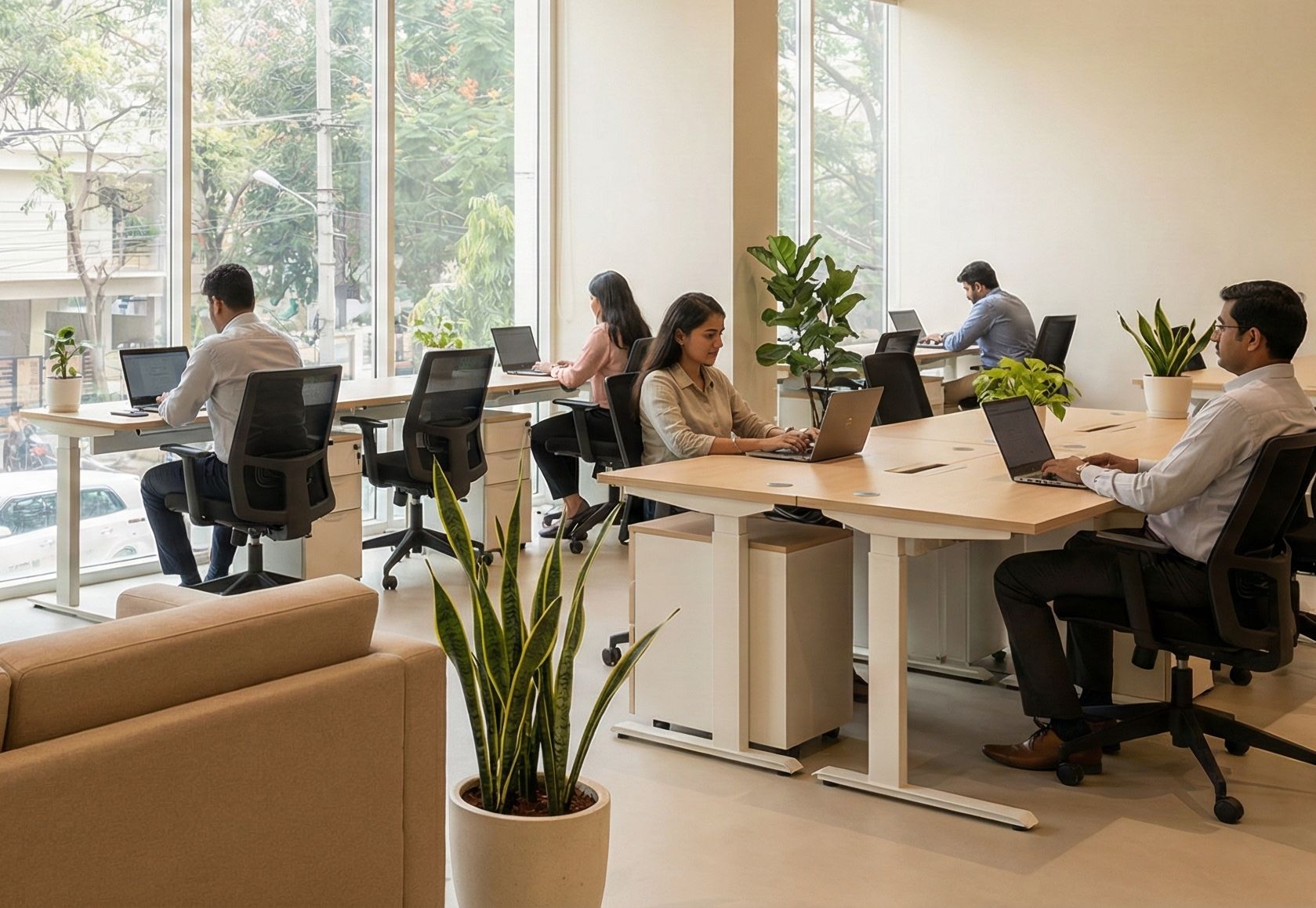
Koramangala is not short of coworking spaces. In fact, it is one of Bangalore’s most saturated micro-markets for shared offices. New spaces launch every year, cafés double up as “workspaces,” and every second building claims to offer flexibility, community, and great coffee. Yet people still move coworking spaces every few months, feel distracted during the day, or quietly regret their decision after the first week.
This guide is written for professionals who want to get it right the first time.
This is not a feature checklist. It is a reality check. If you are looking for a coworking space in Koramangala and you plan to work seriously, meet clients, or build something long term, these are the factors that actually matter.
Why Koramangala Needs a Different Coworking Lens
Koramangala is energetic, crowded, and fast paced. That energy can be inspiring, but it can also be exhausting. Traffic congestion, peak-hour noise, overbooked cafés, and densely packed coworking floors are common realities here.
Because of this, choosing a coworking space in Koramangala is less about finding what exists and more about choosing what supports your workday consistently. A space that feels exciting on day one can become disruptive by week three.
That is why this guide focuses on work sustainability, not novelty.
Location Inside Koramangala Matters More Than the Pin Code
Many listings say “Koramangala,” but Koramangala is not one uniform experience.
A coworking space close to a main road behaves very differently from one located slightly inside a quieter block. Daily commute time, parking stress, noise from traffic, and even walkability during lunch hours change drastically based on micro-location.
When evaluating a coworking space, consider how the location behaves during:
- Morning peak hours.
- Late evening exits.
- Rainy days.
- Client visits.
A centrally located but calmer pocket often performs better than a high-visibility address that drains energy daily. Over time, ease of access directly impacts attendance, punctuality, and mental bandwidth.
Desk Comfort Is Not a Luxury. It Is a Productivity Requirement.
Many coworking spaces showcase aesthetics but compromise on ergonomics. Stylish furniture is meaningless if you leave with back pain or constantly shift positions during calls.
You should actively check:
- Chair support for full-day sitting.
- Desk depth for laptops, notebooks, and screens.
- Legroom and arm placement.
- Natural light placement versus screen glare.
In Koramangala, where workdays often stretch longer due to traffic delays, physical comfort is non-negotiable. A well-designed desk setup directly influences focus, posture, and endurance.
Noise Control Is the Real Differentiator Between “Shared” and “Workable”
Noise is the number one reason people quietly leave coworking spaces.
Open layouts, loud conversations, impromptu meetings, and constant movement create a low-grade distraction that builds over time. Even if you think you can “adjust,” your output usually drops before you realize it.
A good coworking space in Koramangala must demonstrate:
- Clearly separated quiet zones.
- Dedicated areas for calls.
- Sound-managed cabins or enclosed offices.
- Rules that are enforced, not just written.
A professional workspace respects that deep work requires silence, not background buzz.
Internet Stability Is About Consistency, Not Speed Claims
Almost every coworking space claims high-speed internet. Very few talk about stability during peak usage.
What you should actually verify:
- How the network performs when the space is full.
- Whether backup lines exist.
- How often downtime occurs.
- Whether technical support is immediate or delayed.
For consultants, developers, marketers, and remote teams, unstable internet is not an inconvenience. It is a workflow failure.
Privacy Is Essential If You Deal With Clients or Sensitive Work
If your work involves confidential conversations, financial discussions, legal matters, or strategy calls, privacy is not optional.
Many coworking spaces underestimate this requirement and oversell community interaction instead. While networking has value, it should never come at the cost of confidentiality.
Look for:
- Soundproof meeting rooms.
- Enclosed cabins or private offices.
- Phone booths or call-friendly zones.
- Clear separation between social and work areas.
A serious coworking space understands that professionalism requires boundaries.
Community Quality Matters More Than Community Size
A “large community” is often marketed as a benefit. In reality, relevance matters more than volume.
A smaller, focused community of professionals tends to be:
- Quieter.
- More respectful of shared norms.
- Easier to collaborate with meaningfully.
- Less distracting on a daily basis.
In Koramangala, where many spaces attract transient users, a curated professional environment often leads to better long-term satisfaction.
Flexibility Should Support Growth, Not Create Instability
Flexibility is one of the biggest reasons people choose coworking spaces. However, flexibility should not mean constantly shifting desks, renegotiating plans, or relocating teams.
True flexibility allows:
- Easy upgrades from desks to cabins.
- Stable seating options.
- Predictable pricing.
- Long-term continuity without friction.
If you plan to grow, your coworking space should grow with you, not force repeated adjustments.
Operational Discipline Is a Silent Indicator of Quality
Cleanliness, maintenance, and support response times reveal more about a coworking space than marketing copy.
Pay attention to:
- Washroom hygiene during peak hours.
- Pantry cleanliness.
- AC consistency.
- Staff availability for quick help.
Well-run spaces maintain discipline quietly. Poorly managed ones rely on aesthetics to distract from daily operational gaps.
Parking and Access Are Daily Friction Points in Koramangala
Parking challenges are often dismissed until they become a daily frustration.
Before committing, assess:
- Two-wheeler and car parking availability.
- Guest parking for clients.
- Safety during late exits.
- Ease of cab pickups.
In a congested locality like Koramangala, access convenience saves time and reduces daily stress.
The Space Should Support Routine, Not Just Inspiration
Many coworking spaces feel exciting initially but lack the structure needed for consistent work.
A strong coworking space supports:
- Predictable routines.
- Focused work blocks.
- Minimal distractions.
- A professional mindset.
In the long run, routine beats novelty every single time.
Why Spark Plug Approaches Coworking Differently
Spark Plug was built around one core belief: work deserves clarity, calm, and consistency.
Instead of maximizing footfall or noise-driven networking, Spark Plug focuses on:
- Managed offices and private cabins.
- Sound-controlled environments.
- Professionals who value focus over buzz.
- Spaces designed for long working hours, not short visits.
For people who have outgrown cafés, chaotic open floors, or constantly shifting desks, this approach creates stability.
Who This Kind of Coworking Space Is Best For
This style of coworking works best for:
- Consultants and advisors.
- Founders building long-term businesses.
- Remote professionals with daily calls.
- Small teams transitioning from work-from-home.
- Therapists, doctors, and professionals handling confidential sessions.
If your work requires trust, concentration, and consistency, the environment matters as much as the desk.
Choose for the Month, Not the Tour
Most coworking decisions are made after a short visit. The smarter approach is to imagine a full month of work in that space.
Ask yourself:
- Will I feel focused here every day?
- Can I take important calls without stress?
- Does this space reduce friction or add to it?
- Will I still like this after the novelty fades?
In Koramangala, the right coworking space is not the loudest or the trendiest. It is the one that quietly supports your work, day after day.
If that is what you are looking for, choose intentionally. Your productivity will thank you for it.